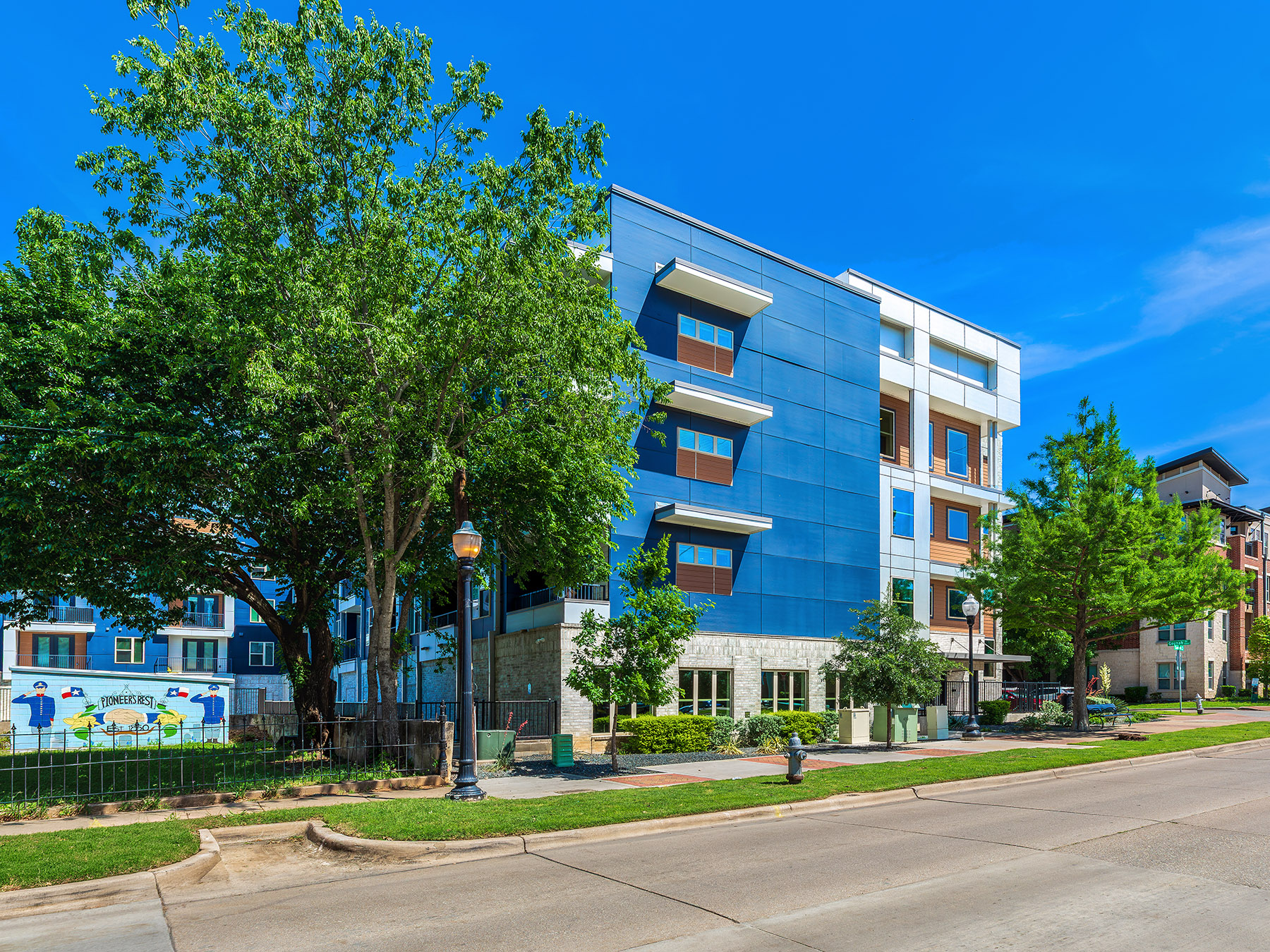
Located just north of Downtown Fort Worth, Trinity Highline transforms a previously vacant, awkwardly shaped parcel into a residential community that responds to the site’s constraints while honoring its historical significance.
The design honors Adolphe Gouhenant, the first European settler of the site and the namesake of Gounah Street, the project’s primary frontage. This history is expressed through two key architectural elements. First, the main entry feature is a contemporary reinterpretation of Gouhenant’s “Temple for the Arts and Sciences” on Fourvière Hill in Lyon, France, a tower he built that served as an observatory, gallery, and workshop. Second, alternating balcony designs reference the historic land settlement patterns of the Peters Colony township where Gouhenant established his homestead.
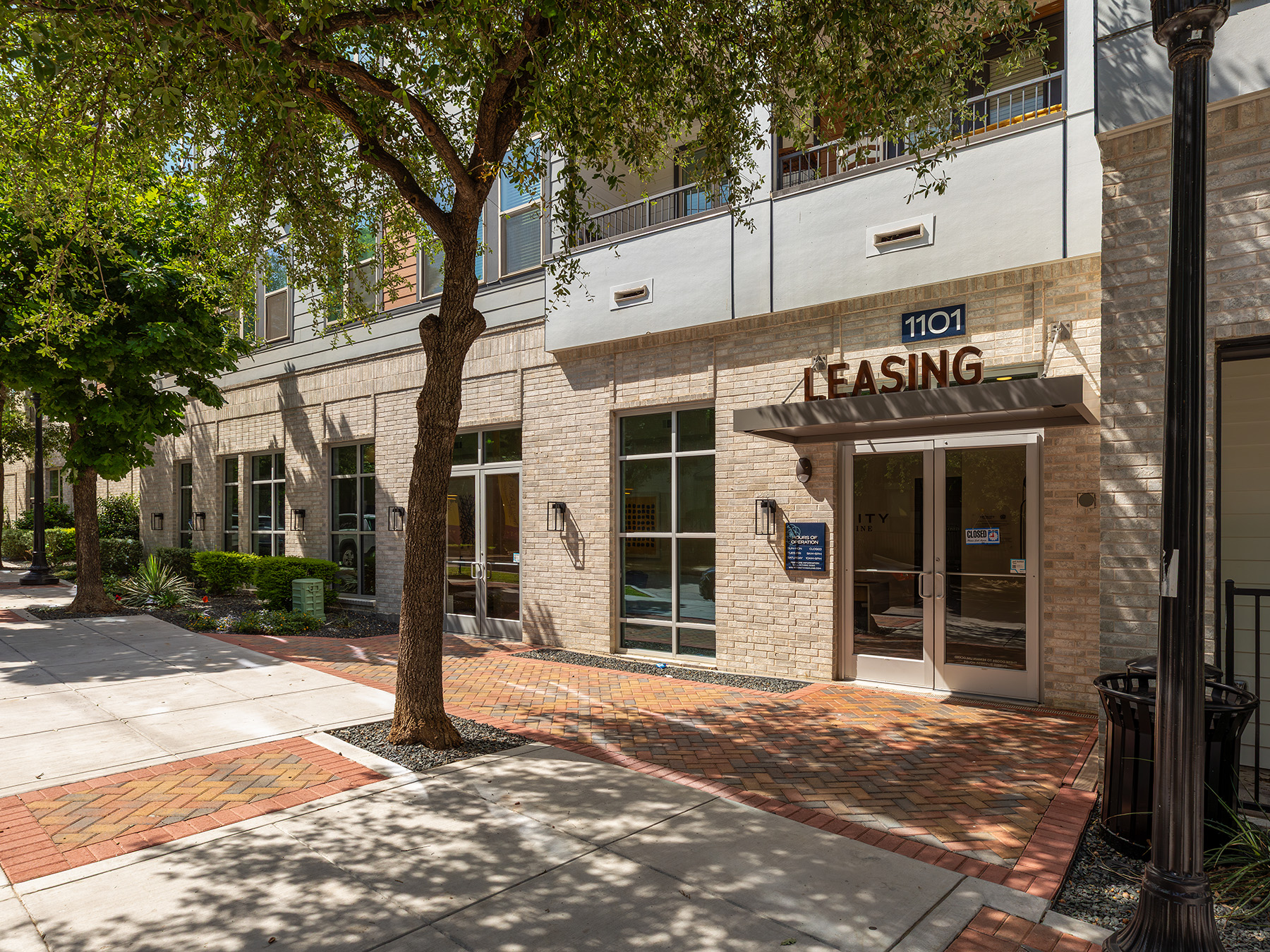
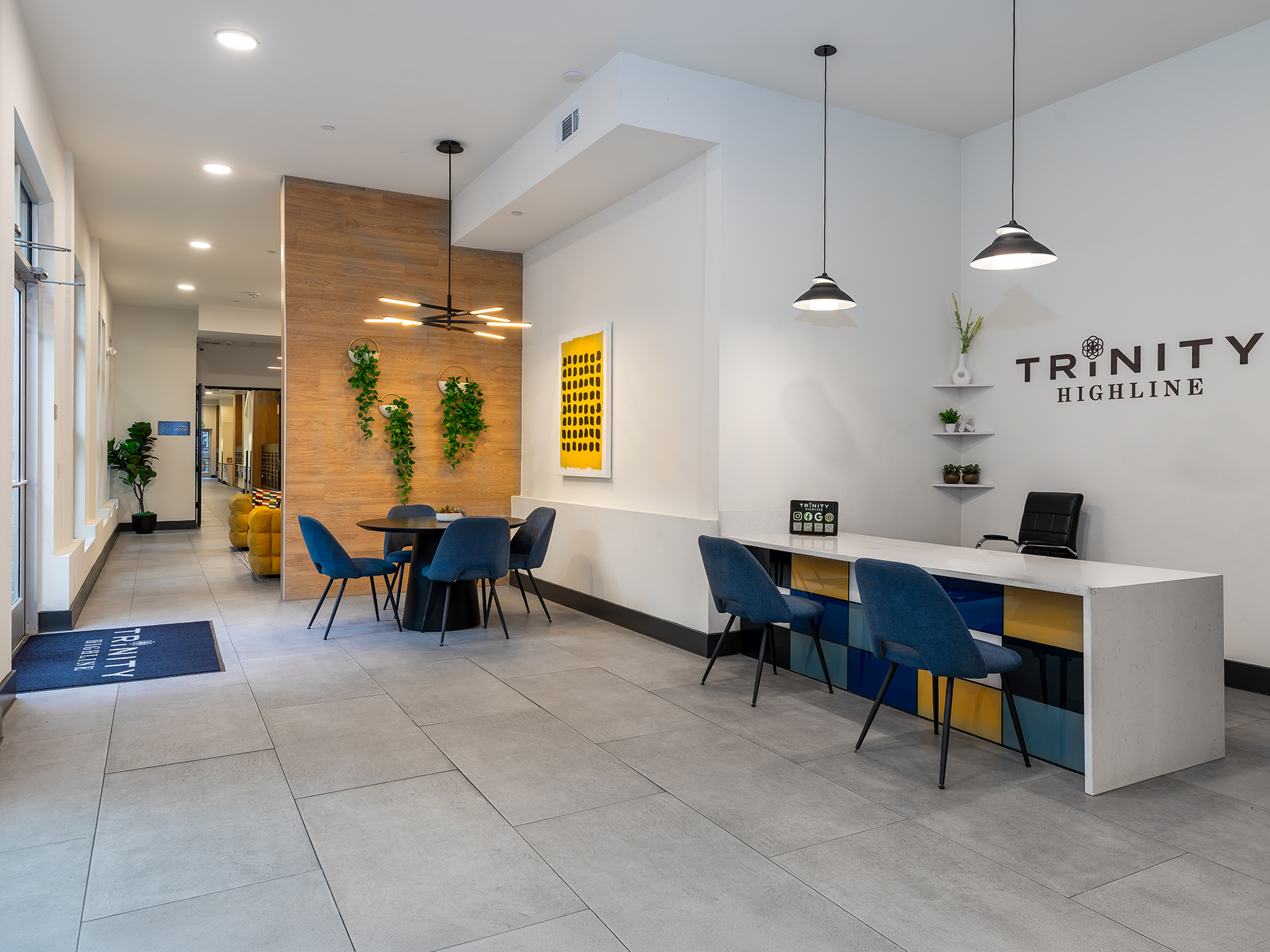
Pedestrian experience was a primary driver of the design, with varied façade treatments along Gounah Street reflecting different unit types and creating an engaging streetscape. A refined material palette of light-colored brick, lap siding, wood-like accents, and blue panels evokes the open Texas landscape and night sky, reinforcing the project's connection to its surroundings. The building’s massing is carefully calibrated to minimize the impact on Pioneers Rest Cemetery, located on land donated by Gouhenant in 1850 just north of the community. Ground-level parking is integrated into the building and screened by amenity spaces, leasing areas, and ground-level residences with direct pedestrian access, creating an active edge along the street.
Trinity Highline celebrates the site’s history through a contemporary architectural response that connects the legacy of the past with the needs of modern residential living.